September 17, 2026
Why Are There So Few Female Politicians in South Korea?
- Male-exclusive Networks: Similarities and Differences to Germany
- Who Can Become a Politician in South Korea? – Past and Present
- Whether Politicians Are Truly Picked on Merit and Ability
On July 1st, former Naver CEO and minister of SMEs and Startups Han Seong-sook was appointed South Korea's new prime minister, the second woman to hold the office. When her somewhat surprising nomination was announced during a briefing a month earlier, a reporter had asked whether her gender had anything to do with the choice, to which the Chief of Staff to the President answered:
“Our personnel policy is strictly based on ability and merit.” [1]
This raises the question: Are Korean politicians really selected based on their ability with no regard to their gender? Which ability exactly? Are Korean women just less skilled than women in other countries, seeing how women elsewhere make it into parliaments at higher rates?
A Brief Look At South Korea's Women's Representation
I have met too many confident, hard-working, and driven Korean women for them to have been a mere exception. Yet, if you look at group photos of politicians, you often need to look long and hard to spot a few female faces.
So, how is the state of female political representation in Korea in 2026, exactly? Let’s look at the results of the most recent nationwide election, the 9th local election of June 3rd, 2026.
[2]
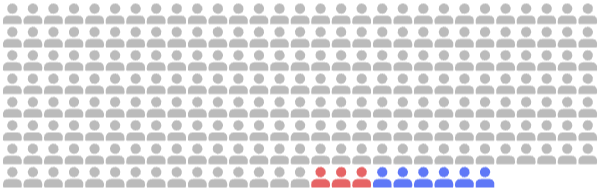
Most important are always the metropolitan government head positions, of which there are 16 nationwide. This includes governors of provinces (for example, Gangwon-do or Gyeonggi-do) and mayors of provincial-level cities (Seoul, Busan, and so on). In the 2026 election, the two big parties each put up exactly one female candidate, both in the same race. Choo Mi-ae, a former party leader of the Democratic Party of Korea (DPK) and a six-term lawmaker, is now governor of Gyeonggi-do Province, making her the first woman ever in 31 years elected to a metropolitan government head position.
[3]
Local government heads were also elected – the heads of normal cities, counties, or the districts of provincial-level cities. For the overall 227 constituencies, a great number of nine women won their races. That’s a whopping 3,96%.
Finally, let’s look at the 300 National Assembly seats. For Korea’s national legislative elections, a weak women’s quota is in place. I’ll make it short: In early 2026, the share of female lawmakers was at 20.8%, ranking 120th out of 184 countries.
[4]
Of course, it’s debatable how meaningful it is to crunch numbers when assessing the quality of representativeness, though that’s a discussion for another time. But compared to other democratic countries, these numbers are extremely low, and there must be some reason for it.
A Politician Succeeding Thanks to His Gender
Whenever the talk is about the importance of valuing merit over gender when selecting politicians, I always have to think of Armin Laschet. Laschet was the chancellor candidate of Germany’s biggest party, the Christian Democratic Union (CDU), for the 2021 German federal election, and was supposed to become Angela Merkel’s successor. His party lost big time, and one reason was its unpopular candidate.
Laschet was not exactly known for his wits. He was always just that guy who happened to have time and was inoffensive enough for nobody to really bother to block his way. His nickname online was “Dice-Laschet”: He used to teach classes at university, when one time he lost the exam papers and opted to give out grades at random – people joked that he probably just rolled the dice – but it all came out because he also gave grades to students who didn’t even sit the exam. He consequently got banned from teaching classes that give any credits.
This makes you wonder how a person like this even made it that far. Well, if you dig up Laschet’s biography
[5], you can see how his often male-exclusive networks lifted him up time and time again.
Laschet was born into a Catholic, male-dominated environment full of locally important people and married the daughter of one of the local big shots. As a university student, he joined two male-exclusive Catholic fraternity networks in Bonn and München. These fraternity networks, usually ranging from moderate conservative to right-extremist (though more liberal ones supposedly exist as well), have influential older members who support the younger ones financially and in getting ahead in their careers. Indeed, at least one political position that served as a steppingstone for Laschet was given to him by a member of another Catholic fraternity. After he graduated, Laschet’s journalistic career launched thanks to a job for a Catholic publication that his father-in-law organized for him. Another journalistic gig was for a TV format led by another fellow fraternity member.
While I’m not qualified to judge Laschet’s political or journalistic skills, it becomes clear that his male networks gave him a huge advantage that people with the same skill set but excluded from these networks – women, for example – would not have had.
Of course, this doesn’t mean that no woman will ever make it to the top, just that the likelihood is lower for women. Angela Merkel made it, though she was also picked precisely because she represented several minority groups within the party in one person: She was a woman, Protestant, and from Eastern Germany. The party therefore deemed her appointment as beneficial for building up the image of a modern, unifying party. She also had huge luck with the timing: Back then, the CDU was caught up in a big scandal, and Merkel had a clean image; she was not associated with the problematic names. In another context, she might very well never have made it – it was the timing that allowed her to turn her disadvantages into an advantage.
[6, 7, 8]
How German Politicians are Made
Fraternities are one type of network that offers doors into the political world in Germany, especially on the more right-leaning spectrum. But there are other ways to enter politics. The most typical ways to the top are regional party organizations and youth party organizations.
Youth party organizations are affiliated with their parent party but operate mostly independently. They are active at universities where students can run for campus elections, and they are in dialogue with their parent party. When old enough, members move from the youth party into the parent party, bringing with them important connections and experience.
Alternatively, you can join the local party branch in your city or municipality and work your way up from there. Successful local politicians can rise to the federal state level, then the national level. Party structures in Germany are quite well institutionalized and therefore offer relatively clear pathways inside and up. Of course, your private network and social skills, financial resources, education, luck, mentors, and election results remain extremely important.
I’m not saying anything new when I say that women still experience disadvantages, even in Germany: Women who enter male-dominated spaces are often overlooked, belittled, or scrutinized. Women struggle to become “one of the boys” and therefore have fewer opportunities to bond with those holding power, who are mostly men. In the worst case, they are relegated to a love interest and have to fend off sexual advances or sexist comments. Female politicians and activists encounter much more intense hate online and offline than do their male counterparts. Gendered care norms make it difficult for mothers to find extra time for political activities. And the list goes on.
As a result, Germany’s politics, too, are still men-dominated. Women currently hold a share of 32.4 % in parliament, not quite a third. Perhaps unsurprisingly, their share is highest in progressive parties, especially the Greens (61.2%), who have far-reaching gender quota regulations in place, and the lowest in the far-right AfD (13.3%).
How to Make it Into the Korean National Assembly?
This makes you wonder what the situation looks like in Korea. After the huge Me-Too Movement in the late 2010s, social awareness about sexual assault and sexism has increased a lot. Is the door now open for female competence? Let’s first take a look at the background of the people who fill the 300 seats of the National Assembly.
In the DPK, activists still take up the largest share. The leadership and assembly members have long been dominated by former political activists, stemming from the fact that the party traces its roots to the democratic movement of the 1980s and has close ties with the labor movement. For the PPP, those with bureaucratic backgrounds, usually high-ranking civil servants, take up the highest share. Typical is also a background in law: Many lawmakers used to work as lawyers, judges, or prosecutors. Especially among first-time assembly members, those who studied law are on the rise, while those with military, activist, journalistic, bureaucratic, and academic backgrounds are in relative decline.
[9]
So how do people who are not former student activists enter politics? Which networks connect them to the political world?
Let’s first look at local party organizations and youth party organizations, the most important way to the top in Germany. Unlike Germany, Korea’s parties are commonly considered weakly institutionalized.
[10] The duality of the two big parties, one conservative, one liberal, has been a very stable constant ever since democratization in 1987. But the parties themselves often have only weak procedural structures and organizations. They frequently split and merge, and revolve around powerful leading figures instead of being grounded in their members’ political consensus.
Local party offices used to exist but were abolished in 2004 due to an illegal funding scandal. Only recently were they reintroduced in April 2026, although it’s unclear how much they’ll be able to establish themselves.
[11] Local political networks of course exist, but they are very hard to enter for newcomers: The local political scene revolves around the National Assembly incumbent elected for the respective constituency in the national election. This National Assembly member has to rely on the political support of local politicians, for example for party nomination processes or the mobilization of voters. Local politicians in turn also depend on the assembly member’s political and (illegally) sometimes also financial support. This creates a close-knit network among local politicians and other stakeholders that rewards loyalty and tries to keep rivals outside. Local actors rarely change their loyalty for fear of negative consequences.
[12] Overall, local politicians are dependent on national-level politicians and party organizations, leading to patron-client relationships. The national party leadership remains in control while citizen participation from the bottom-up is marginalized, making it hard to find entry into politics at the local level.
[13]
Then how about youth organizations? Youth party organizations were founded by the two big parties in 2020 when political elites started to realize that young people’s fickle political support would determine future elections. But the People Power Party (PPP)’s organization now lies completely dormant, and the DPK’s “Youth Committee” lacks autonomy and relevance. Even before, both parties have picked up young politicians from nothing and paraded them around for elections, just to abandon them immediately after, when the fresh new face lacked a broader support base or had displeased the party leadership.
Another huge problem for young politicians is financing their political career: An election campaign in Korea requires enormous personal funds that are only repaid if you gain a certain share of the votes. For young people without a big business or a wealthy family sponsoring them, running for elections becomes practically impossible.
[14]
If there aren’t really any youth party organizations or local party organizations that meaningfully include newcomers into political circles, how do the parties then find new personnel? In a nation crazy about education, the answer is often educational ties.
In the current National Assembly, 115 lawmakers (38.33%) graduated from the SKY universities (Seoul National, Korea & Yonsei). Among these, 65 came from Seoul National University alone – that’s one person more than the 64 women in the National Assembly. Seoul National University’s law school (previously the College of Law) is an especially well-known hot place for future politicians. But while these numbers seem very high, they were even higher before, suggesting gradual diversification.
[15]
How Korea’s Patriarchal Society of the Past Shapes the Political World of Today
We have seen that political circles in Korea are quite exclusive and difficult to enter for outsiders. So, when and how does gender come into play?
Let’s maybe start with the democracy movement of the 1980s, where the roots of the DPK lie and from which many party elites emerged. Back then, women had participated in the protests as well; however, Korea’s militaristic culture, with its masculine ideals and good old traditional sexism, was widespread among the student protestors, too. Korea was a developing country with an authoritarian regime, so education and awareness on gender equality topics were of course not really a thing.
To quote the book Flowers of Fire by Hawon Jung (p. 105): “In the circle of pro-democracy activists, only men were recognized as true fighters who could be promoted to powerful key positions […]. Sexism and sexual assault were widespread in this community, but anyone who criticized the activists in charge was condemned […].” One former female activist who participated in the protest is quoted with the words: “Women like me dedicated our lives to the pro-democracy, labor-rights movements, yet we were always treated like extras or cheerleaders–not to mention being subjected to rampant sexual harassment.” As was the norm then, many of her female peers became housewives and took up housework and care work, while their husbands built their careers.
We also learned that university networks are very important. The average age of national assembly members in Korea is currently 56.3 years, meaning the average lawmaker would have attended university around 35 years ago, around 1990. The early 1990s were actually the time when the big conglomerates for the first time accepted women for manager-track positions.
[16] Women were also just starting to enter law school: In 1992, only 5.5% (16 out of 288) of successful bar exam takers were women; in 2001 it was nearly 20%; later it would fluctuate between 35% and 45%. The 1990s, when the average Korean politician of today was making his important connections, were therefore the time when the first women just started to push into the professional world. They were, however, still outsiders and deviations from the norm and often ended up working as the only woman among men, with the typical difficulties and accompanying discrimination.
While these times now seem far away, in circles of power the effects are still very visible. Progress is happening on the ground level, but it will take time for it to seep through rigid political structures.
Daily Struggles and Structural Discrimination of Female Politicians
Finally, I want to take a look at the specific struggles female politicians face in more recent times in building and maintaining their political careers. My main source is a dissertation published in 2017, so here is a short disclaimer that the information might not be completely up to date anymore.
[17]
I already touched on this when looking at local political networks, but the financial strain of campaigning and sustaining a local support network deserves special attention: Politicians are expected to contribute money to local events, be generous with meals and gifts, pay for private expert advice, pay their staff, and rent office space. As all this is well-known, the party prefers nominating wealthy politicians for local party leader positions. Women are often still less wealthy and less integrated in local, often male-dominated networks, such as alumni networks or hiking clubs. This means that female politicians often have fewer personal financial and social resources than male politicians and overall raise fewer contributions.
Another challenge for women is the normalization of high alcohol consumption. Drinking sessions, often going until late at night, play an important role in bonding, networking, and decision-making among local politicians, journalists, and other actors. Women are highly disadvantaged here: They are less likely to attend late-night drinking sessions due to responsibilities at home or possible damage to their marriage or reputation. For a long time, unwanted touching was often also part of the deal that women simply had to accept and laugh away if they didn’t want to make enemies of important people. In earlier times, it was also common for these old boy clubs to visit sexual establishments together.
Of course, being a female politician does not necessarily have only disadvantages. Those who are successful have learnt to turn gender stereotypes into an advantage. Excluded from the eating and drinking sessions of the old men’s network, many female politicians instead work hard on their bills or attend more meetings with citizens. Especially senior citizens often find younger women more relatable and approachable than older, male politicians. Female politicians also often choose to work on education, family, or welfare issues, where women are often assumed to be more competent.
Old Men Who Cannot Let Go of Their Power
Korea has long operated in a highly centralized, top-down manner, allowing for strategic and precise resource allocation, efficient processes, close control over all actors, and quick adaptation to changes. This was necessary for rapid modernization and clearly a successful strategy. The logic of this centralized structure, still reflected in the political system, now works against creating a more inclusive democracy that can incorporate and moderate the interests of different groups in society and more effectively protect weaker social groups.
A slow diversification seems to be in motion, but as of now, elitist male networks are still dominant in their grip on power in Korea. Old laws and structures are hard to change, and the only ones with the power to change them are the same ones who would have to give up part of their power, so rapid change seems unlikely. Past efforts to break up the monopoly on power (or rather the duopoly of the two parties) ultimately failed because those on top just cannot bear the thought of letting go of some of their privileges, as the satellite-party phenomenon has vividly demonstrated.
As long as old customs, established power structures, and party and election law effectively lead to political networks that are exclusive, top-down, and elitist, having slightly more women (from elite circles) in politics does not necessarily equal progress and inclusiveness. I believe this is why recent academic discourse has moved away from simply counting women and moved towards investigating the quality of representation and how to build a participate democracy.
Meanwhile, Korean female politicians have, of course, not sat still. In 2020, the Korean Women’s Political Network launched its activities in response to a prominent political sexual assault scandal in the DPK. The network strives to strengthen women’s voices in politics and connect female politicians and activists nationally and internationally.
[18]
As more and more women will be able to build up wealth and social resources, increasingly more women will likely be able to enter political circles. However, this doesn’t change the fact that the political system remains exclusionary towards huge parts of society. To effectively remove the barriers to political participation and representation that women face today as one of the less powerful groups of society, the system as a whole needs to be reformed. If the number of women increases, but these women are from the same elitist background as their male peers, it is doubtful whether they can truly help give a voice to the less powerful in society.
Conclusion – An Exclusive Political System
So, are politicians we see at the top selected by merit and ability? I’d argue that there are three aspects to the answer to this question.
First, merit and ability matter but are just one factor among others. We have seen that personal wealth and family background, luck, or loyalty to the right person still matter a great deal. It might not be a lie when politicians talk about merit and ability, but it is far from the whole picture.
Second, what falls under merit and ability also has to be defined – is it professional knowledge and experience in a specific field? Leadership and responsibility? Is it being empathetic and attentive to others, bringing people together and being a good mediator? Is it smooth-talking and being able to craft a positive image? Is it the willingness to strategically outmaneuver one’s enemies and exploit their weaknesses, no matter the cost?
Third, what is for sure is the fact that the pool out of which politicians are selected from, ideally based on merit and ability, is severely limited and therefore will simply not include many talented and skillful people – such as those who are not sufficiently wealthy. Women happen to be one of the social groups less likely to be wealthy. They are also disadvantaged by patriarchal ideals of what a competent politician should look like, and they are often excluded from male-dominated institutions of networking, such as the culture of heavy drinking.
As of now, women’s interests are not sufficiently represented, and sexism makes it hard for women to enter and stay in politics. But the low percentage of women is also a symptom of a deeper issue: It is the result of a political system in the hands of a small, exclusive group that often voices the intention to be more inclusive, but always fails at the point where it would have to give up part of its own privileges.
Ultimately, to create a more functional democracy, it doesn’t suffice to ask why women are disadvantaged within the current structures. If the system works such that personal wealth and being friends with the right person are needed to be a successful politician, then yes, women could actually be argued to be less skillful in politics. But is this a desirable political system? What would need to change to create a more responsive, inclusive, and fair democracy?
Of course, these decisions always require trade-offs. More participation equals slower and more costly decision processes. When Korea was poor, this was a luxury the country could hardly afford, but this has begun to change. Now that women are as educated as men, their low representation in politics can hardly be justified anymore. Ultimately, democracy is a constant negotiation process, and over time, it will become harder and harder to keep women excluded from it. Whether old structures can change towards allowing more meaningful inclusivity for all social groups, or whether powerful groups will only consolidate their grip on power alongside rising inequality, remains to be seen.
Sources
[1] https://www.hankookilbo.com/news/article/A2026060813460003711
[2] https://election2026.newtamsa.org/result/
[3] https://www.yna.co.kr/view/AKR20260603058600530
[4] https://www.womennews.co.kr/news/articleView.html?idxno=275348
[5] https://www.youtube.com/watch?v=7hpCxYkBjDs
[6] https://www.theguardian.com/world/2000/mar/21/johnhooper
[7] Wiliarty SE. The Rise of Angela Merkel: Policy and Personnel Decisions of the CDU in Unified Germany. In: The CDU and the Politics of Gender in Germany: Bringing Women to the Party. Cambridge University Press; 2010:163-184.
[8] Wiliarty, SE. (2008). Angela Merkel’s Path to Power: The Role of Internal Party Dynamics and Leadership. German Politics, 17(1), 81–96. https://doi.org/10.1080/09644000701855168
[9] https://n.news.naver.com/mnews/article/009/0005213706
[10] https://doi.org/10.1093/oso/9780198888734.003.0019
[11] https://www.hani.co.kr/arti/politics/politics_general/1254817.html
[12] Lee, Young-Im, “Leaky Pipeline and Sacrificial Lambs: Gender, Political Parties, and Descriptive and Substantive Representation of Women in South Korea, 1988 – 2016” (2017). Dissertations. 648.
https://irl.umsl.edu/dissertation/648/. p. 69-70.
[13] Han, JeongHun, Ramon Pacheco Pardo, and Youngho Cho (eds), The Oxford Handbook of South Korean Politics, Oxford Handbooks (2023; online edn, Oxford Academic, 8 Dec. 2021), https://doi.org/10.1093/oxfordhb/9780192894045.001.0001, accessed 15 Sept. 2026.
[14] https://www.hani.co.kr/arti/politics/politics_general/1102798.html
[15] https://blog.naver.com/pso164/224305571210
[16] Flowers of Fire by Hawon Jung, p. 18.
[17] Lee, Young-Im, “Leaky Pipeline and Sacrificial Lambs: Gender, Political Parties, and Descriptive and Substantive Representation of Women in South Korea, 1988 – 2016” (2017). Dissertations. 648.
https://irl.umsl.edu/dissertation/648/
[18] https://biz.heraldcorp.com/article/10778406